Mint Lemonade Refreshers

$4.00

Flavor Profile: Mint, Lemon, Mazahr (Orange Blossom)

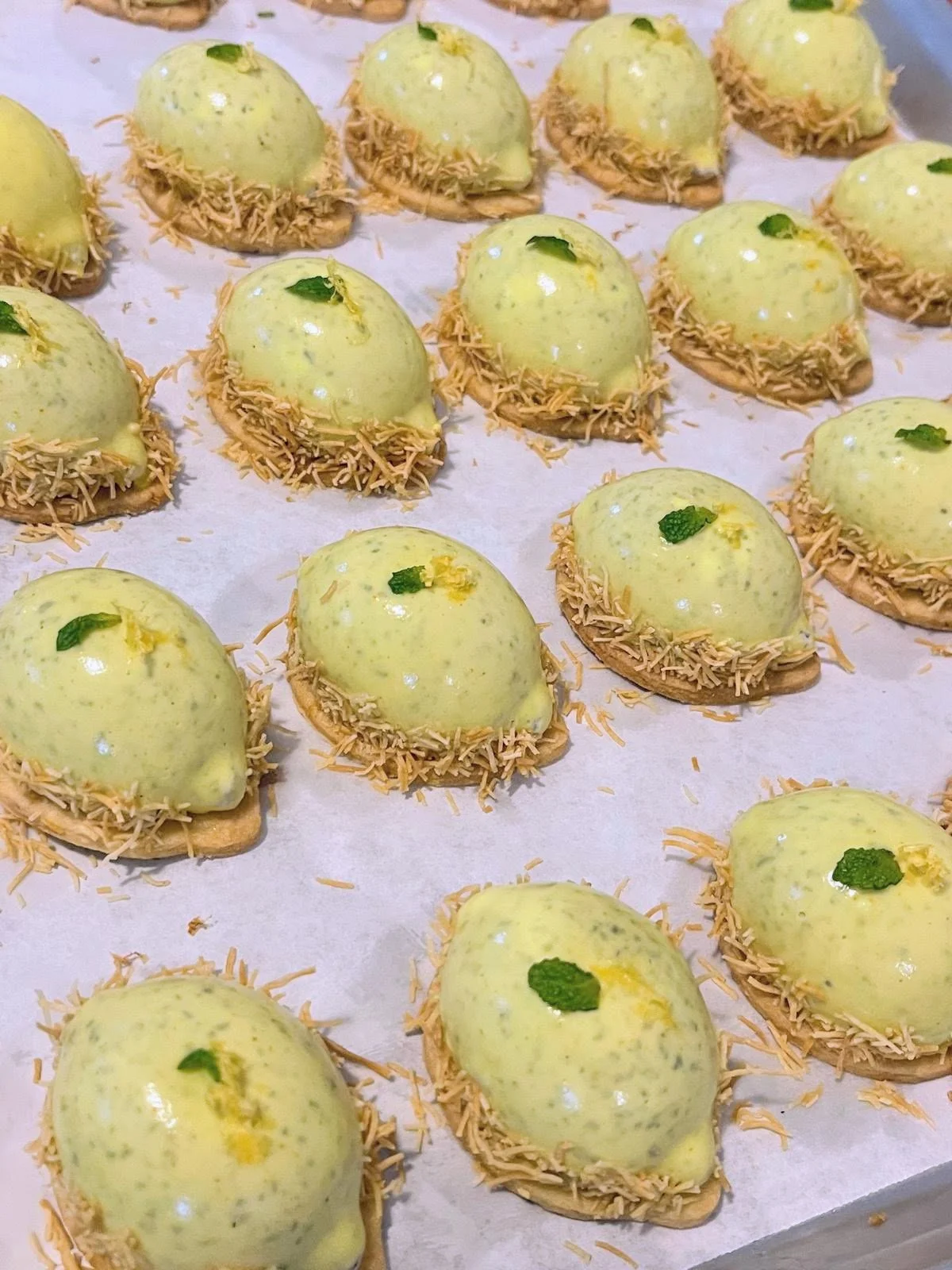
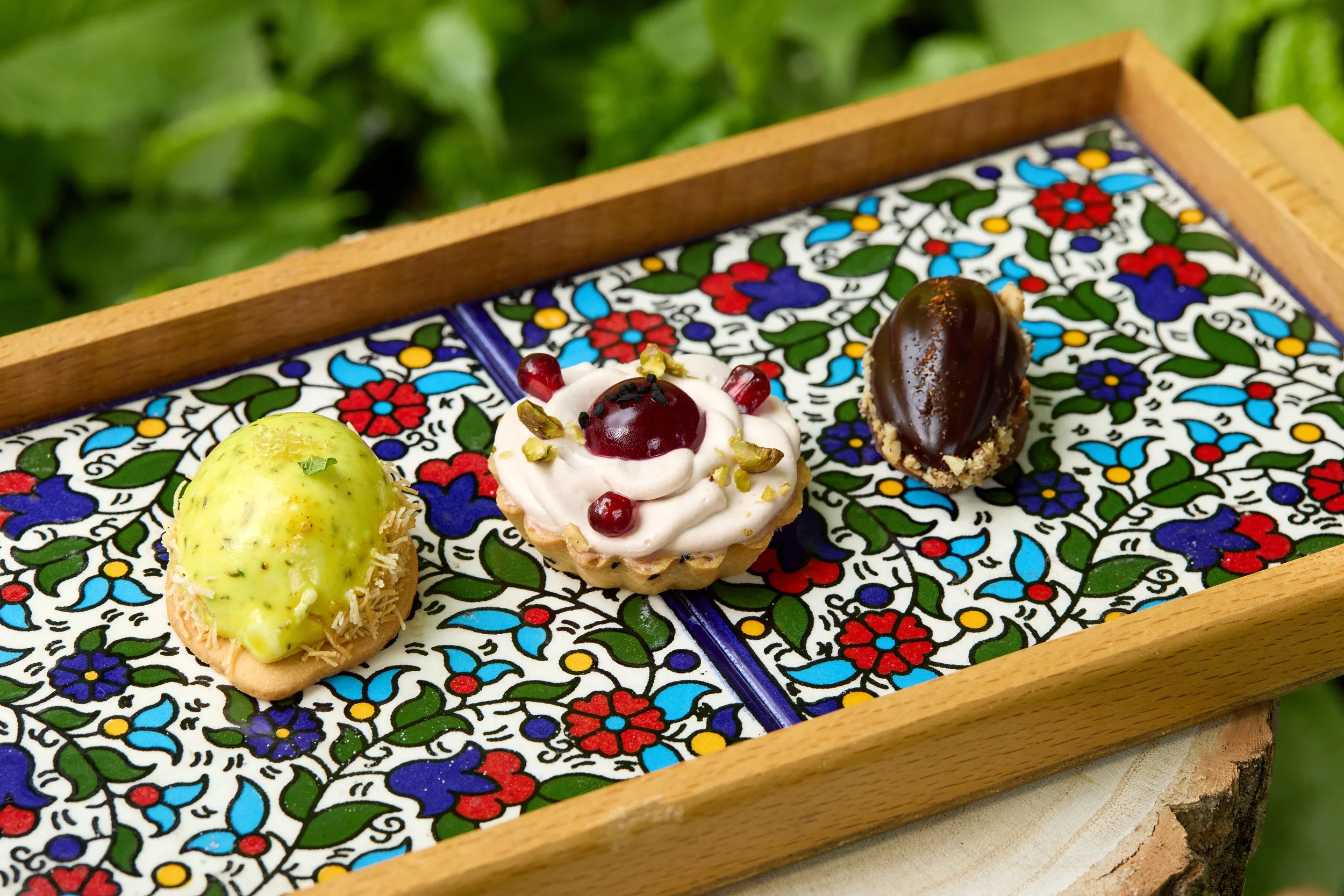
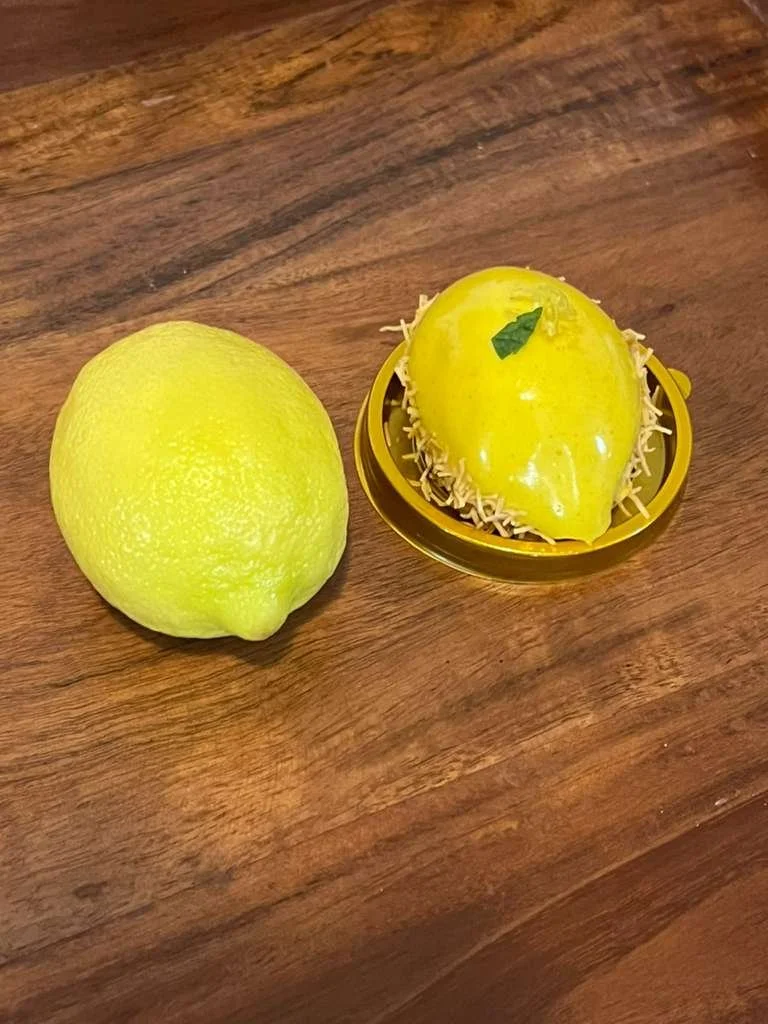
Story: A smooth and refreshing lemon cremeaux, surrounded by a light mint mousse and adorned by a white chocolate mazahr (orange blossom) glaze. Atop a lemon pâte sucrée cookie on a nest of toasted kataifi dough for some crunch. Reminiscent of a bright sunny day along the Mediterranean sea. Enjoy in a moment of relaxation, celebration or however you choose! You can’t go wrong.

Minimum order: 6

Contains nuts (almond flour), dairy, eggs, gluten. Produced in an kitchen that contains nuts.

Flavor Profile: Mint, Lemon, Mazahr (Orange Blossom)

Story: A smooth and refreshing lemon cremeaux, surrounded by a light mint mousse and adorned by a white chocolate mazahr (orange blossom) glaze. Atop a lemon pâte sucrée cookie on a nest of toasted kataifi dough for some crunch. Reminiscent of a bright sunny day along the Mediterranean sea. Enjoy in a moment of relaxation, celebration or however you choose! You can’t go wrong.

Minimum order: 6

Contains nuts (almond flour), dairy, eggs, gluten. Produced in an kitchen that contains nuts.

Significance

Limona’ana: Mint lemonade is a staple of Lebanese hospitality generosity and respect. Offered as a welcome into the home, lemons ripe in flavor especially known in Ancient Lebanese cities like Sida in the South or Batroun to the North, known as citrus cities for their seas of citrus trees. It is a classic refreshment that has been offered typically using macerated whole lemons, mint and orange blossom water. This drink was also commonly had by the Ranya and family when recovering from illness as a key source of Vitamin C and the soothing feel of orange blossom.

Mazaher (Orange Blossom): Orange blossom is deeply rooted in Palestinian and Lebanese culture blooming in the orange groves of Yaffa, Palestine. Before the Nakba in 1948, Yaffa was a trade hub in the region, citrus as a key element of it’s production and its memory. In the 1800s, Palestinian farmers created a new mutation of orange that was sweeter and more fragrant called Shamouti.